
A God that Blesses
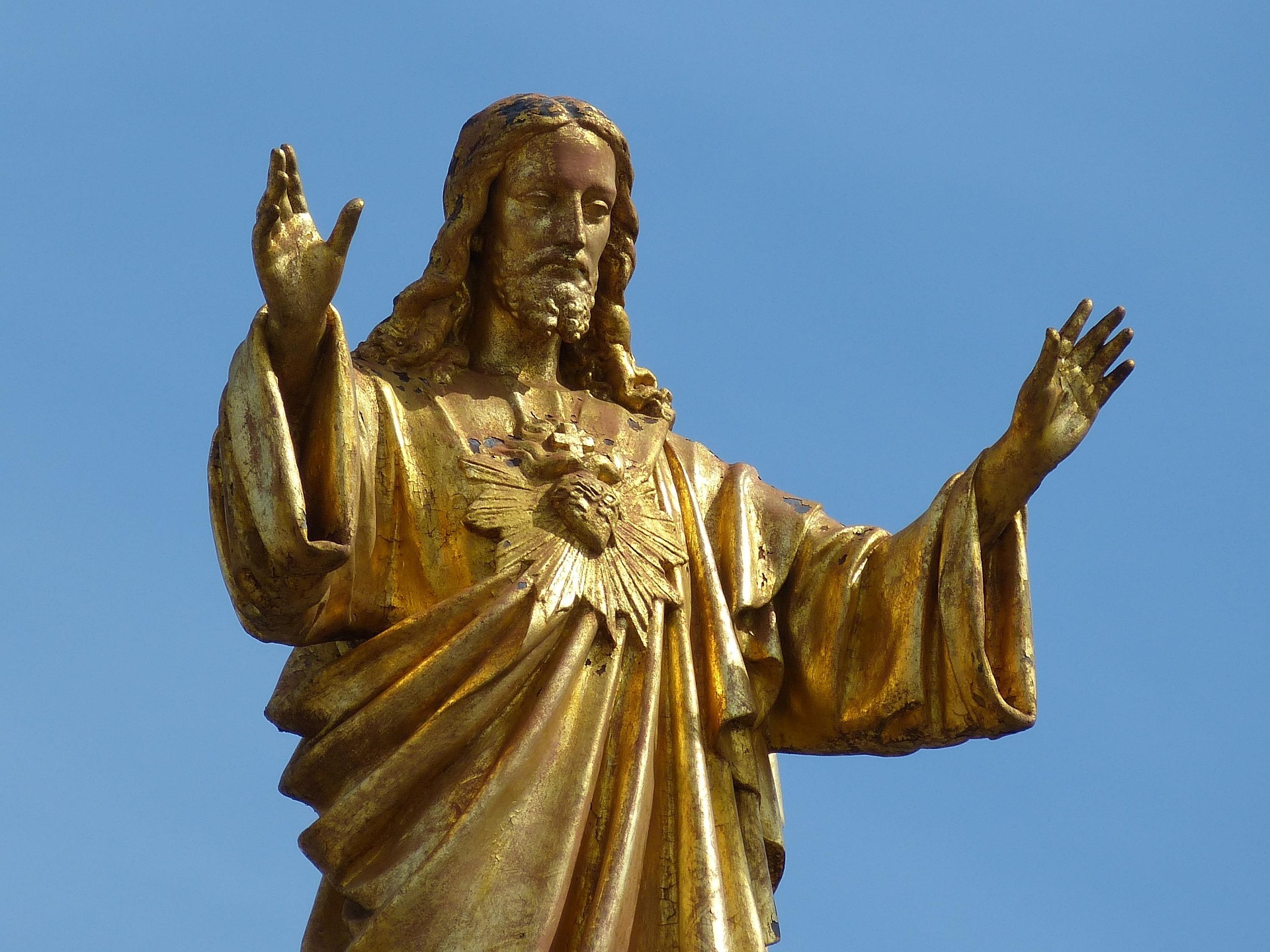
Did you ever notice the first encounter of God with a human? (Gen. 1:28). Theologians call this ‘the law of the first mention.’ First mentions seem to set a trajectory for the rest of the Bible – that’s why Genesis is so important to us. Let’s take a closer look. In most of our encounters with God, we do the talking, asking God for things. In this first encounter, Adam, the first human, said nothing. Eve was present as well. But God did all the talking. Perhaps we have misunderstood prayer. What if the goal of prayer was not for God to hear us, but for us to hear God?
What did God say to Adam? That’s very important! God blessed them, Adam and Eve together. The word bless in Hebrew is barak meaning knee. That seems to connect prayer and humility to the blessing of God. Prayer is an attitude as much as it is language and it is demonstrated by our humble and reverent posture before God. In humble prayer, we put ourselves in a position that invites God’s blessing. Sadly, too often, we place ourselves in charge of the encounter, giving God a list of ‘to-do’ items. Directing God as if we knew best. We take the dominant position and attempt to place God in the role of our servant. That view of prayer is upside down.
The word bless in variant forms litters the pages of the Bible. The Bible is a veritable book of blessing, of God’s relentless desire to build a bridge to humanity. He wants to connect with fallen humans. Though our sin and rebellion are an affront to His holiness, He still searches for the man, the woman, the family, for a people He can bless and through whom He can bless others. Underneath the sin in our lives is the image of God. He longs to bless us, to peel away the layers of sin and their damage and restore the reflection of grace, love and life.
Permit a brief journey into the weeds. The word bless or a derivative shows up 378 times in the NKJV of the Old Testament. It appears 98 times in the psalms since the psalms are a collection for worship and an inspirational source for life itself. It appears 70 times in Genesis, the book of beginnings, which sets the trajectory for the rest of the Bible. And some might be surprised that it shows up 48 times in the book of Deuteronomy, the book of law. Blessing and right-living are then bound together. As in Genesis, God speaks a blessing, and then He established a boundary which if ignored, diminished the blessing. The great commandment, as Jesus called it, was the blessing of love. It was at the head of all other laws. James called love the ‘royal law’ (James 2:8). Paul asserted that “the entire law is fulfilled in keeping this one command: ‘Love your neighbor as yourself ’” (Gal. 5:14), and that “love fulfilled the law” (Rom. 13:8). The ultimate discipline in one’s life is the ability to love and bless your enemies.
The specific term bless appears approximately 127 times in the Bible. The word blessed occurs about 302 times. In the NKJV, bless and blessed are found 495 times. Blessest is used 3 times in the KJV, “[H]e whom thou blessest is blessed, and he whom thou cursest is cursed” (Numbers 22:6). The old Elizabethan King James language is simplified, for example, in the NIV, “For I know that whoever you bless is blessed.”
The blessing of God triumphs over all other words spoken to us, against us or over us. You and I are blessed because of God’s disposition toward us and His declaration over us. I am sure you want God’s blessing. And that seems to be connected to both humility and prayer. Altogether, there are more than 600 blessings in the Old Testament alone. The Bible is, indeed, the book of blessing. God longs to bless you and bless others through you.
The blessing of God is a reflection of His character, His goodness. It is His goodness that Adam and Eve missed. Consistently, in Genesis 1, God sows His goodness into creation. “And God saw that it was good… God saw everything that He had made, and indeed, it was very good” (Gen. 1: 4, 10, 12, 18, 21, 25, 31). Here is Creation brimming with the goodness of a good God. More fundamental than faith in the ability of God or in His willingness is faith in the character of God. The absence of confidence in God’s goodness is deadly.
In a well-worn passage from Hebrews, the author declares that “without faith it is impossible to please God!” (Hebrews 11:6). “He that comes to God,” that is essentially prayer, whether to make a request, to intercede, to offer thanks, or to worship. We are standing before His presence. When we come to God, we “must believe.” But what must we believe?
First, “that God is,” that is, that He exists. We are not talking to the walls when we pray. This is explicit in the text. There is also an implicit idea. We must not only believe in His existence, but in His ability. Otherwise, why would we pray? Why would we come to God? There is more. Beyond faith in the existence and ability of God there is another element. “We must believe” that God “is a rewarder of those who diligently seek Him.” Let’s note two things. First, the presentation of God as a ‘rewarder’ indicates His nature, His character. He is an open-handed God. He is benevolent. He is good. This goodness is seen by those who do not merely seek answers. They seek the God who answers. They seek ‘Him’. This is a focus beyond the existence or ability of God to which we appeal. It is a desire for His presence.
Such people receive more than answers – they receive rewards. Answers and rewards are two different things. Answers are our prescriptions for our troubles; rewards are those things that come from God. Rewards were not even on our radar screens. Someone has counted, noting 650 prayer requests in the Bible, and 450 times God answered. God hears and responds to us when we pray. But, the most powerful outcome is not an answer, not something what we get from seeking the hand of God that we have prescribed for ourselves. The most powerful outcome is a reward. That’s what we get from seeking the face of God. Faith in the character of God is fundamental to a balanced, healthy Christian life. From His character, out of His goodness – He blesses.
In Genesis, the Hebrew word, barak, is the picture of Adam and Eve on their knees before God, receiving His blessing, and what a blessing! It is the closest thing in Scripture to their wedding ceremony. It was empowering, “Be fruitful … fill up the earth … manage it.” The globe! He put them in a garden, but He had the globe in mind. Managing the garden they would have proved themselves worthy of managing the globe.
The blessing was also lifegiving – God breathed on man, animating him with His own life. It was generational, not only for Adam and Eve, but also for their sons and daughters. Being fruitful was within their power, but multiplication was God’s blessing on their children and the generations that would follow. Caring for the whole earth would have required an army of humans. This was the blessing of God on the family, to serve as agents of God’s kingdom. It was the language of empowerment, not victimhood.
In Genesis 2, God set boundaries to preserve the blessing. When the couple violated the boundary and ate the forbidden fruit, they immediately felt the consequences of their sin. It changed the nature of their relationship with God and with one another. They had failed to trust God’s goodness – His character. Yet God, because He is good, acted redemptively. He called them. He came looking for them. This is the nature of our God. He acted to keep, in a measure, the blessing in place.
When humanity irreverently tramples on God’s boundaries, they forfeit the fullness of God’s blessing. They are left with common grace, God’s goodness to all humanity. To tap the special grace that unlocks redemptive power, there must be movement toward God. That act of obedience and surrender enables the grace empowered redirection of our lives. In the absence of repentance and reconciliation with God, sin and rebellion multiplied in Adam’s children, demanding a correction by God’s punitive action.
Their authority, their responsibility had been the globe, in which they were to be the agents of blessing. But they failed in their mission. As a consequence, they lost both the garden and their influence over the globe. Thus, instead a global blessing flowing through godly, obedient and righteous priestly representatives of God, a global flood would be triggered by the wholesale human rejection of God. This is the macro end of the micro deviation that began in the garden. It is the end of little sins, amplified, incrementally intensified from one generation to another, until the transgressions are no longer tolerable. The loss of the garden by Adam and Eve may seem a small thing to us in the overall scope of things. However, it is the root of the global disaster that followed in Noah’s day. The flood was small incremental deviations written large.
But God, in His grace, spared Noah and kept the blessing alive. “Noah found grace in the eyes of the Lord… Noah was a just man and perfect in his generations, and Noah walked with God” (Gen. 6:8-9). In the same context, the Bible mentions Noah’s ‘generations.’ The grace he found was an inheritance for his children. The grace that spared him, spared them. He was to be the new channel of global blessing, the role for which Adam had been created and commissioned. Sadly, Noah failed, as Adam had failed.
This failure to receive and hold God’s blessing inside His boundaries, and to be an instrument of blessing reached another epic point in the building of the ziggurat at Babel. This tower was an astrological worship center, thoroughly pagan in nature. Humanity had rejected God and His blessing again. Babel means confusion. That’s what turning away from the goodness and blessing of God brings – confusion. This repeated pattern of resistance to God, of excluding God, is characteristic of living in a fallen world. Humans are no longer the noble creatures they were created to be. Yet, instead of another act of global judgement, God broke the power of evil by the first miracle of tongues. At Babel, men could no longer communicate with one another and consequently, their mission was halted, and the power of their unity was broken.
Today, language is still a barrier, but not a formidable one. Now, evil is again uniting around a defiant global purpose that excludes God as did Babel. It is again one driven by pagan values. In Revelation, Babel reappears (Revelation 17:5-18; 16:19; 18:2). Without God at the center, we discover the future Babylon to be home to the demonic. In that way it resembles Babel, the astrological and pagan worship center of the post-flood world.
We should note, there are only two cities – Babel, where God is a visitor (Genesis 11:5), not an honored resident; and Jerusalem, the fortress of peace (Psalm 122:6-8; Zechariah 8:7-8). Jerusalem is where the temple was built as a symbol of the presence of God. God then is at the center of Jerusalem, honored and worshipped. There, God’s presence invites His peace. That is the essence of the name salem. It is a derivative of the word shalom.
The opposite of shalom is separation, corruption, division, and brokenness, a lack of integrity or wholeness. It is the absence of peace with God or others. Sin always leaves rubble – the rubble of the flood, or that of the abandoned tower at Babel resulting from the scattering of humans. There was also the rubble of Jerusalem during the time of Judah’s exile, and again, with Rome’s destruction of the city and its temple in 70 AD.
Our lives, likewise, are left in rubble when we violate God’s boundaries – marriages collapse, parenting becomes confusing, finances decline, joy becomes elusive, peace evaporates. Everything seems broken. We long for love, to again belong. We are sometimes like the first exiles who returned to Jerusalem from captivity, lacking both the will and resources, they became accustomed to living in the rubble (Neh. 4:10; Isa. 58:12; Isa. 61:1-6). Even the temple, the place of God’s presence, the place they believed to be invincible, was destroyed (Jer. 7:4; 1 Kings 9:8-9; Lam. 2:2-22; Psa. 79:1).
Of course, God no longer desires to dwell in man-made temples made with human hands. He longs, as He did with the first human, to be so close to us that he breathes on us and lives inside our hearts (Acts 17:24; 7:48-50; 2 Chronicles 2:6; Isaiah 40:21-22). We were created to give Him visibility. We were made in His image, designed to reflect Him to all Creation. After the resurrection, Jesus breathed on the disciples and told them to receive the Holy Spirit (John 20:22). He would again live inside of the human heart. We are then the new creation (2 Cor. 5:17).
This was His plan, to “conform us to the image of His dear Son” (Rom. 8:29). To make us like Christ, who is “the visible likeness of the invisible God” (Col. 1:15), the first-born Son. To restore in us the image of God (Gen. 1:27) that had been marred by sin. When Jesus left the earth, he blessed the disciples that followed him to the Mount of Olives – almost 500 (Luke 24:50). It was his last and enduring act – to pronounce a blessing. As we have noted, the appearance of man in the Creation story begins with the blessing of God pronounced on Adam and Eve, the first human couple. Blessing is then the Father’s first word, and blessing, as we have seen, is the Son’s last word. Thus, creation and redemption, the beginning of all things with God the Father, and the end of the life of Jesus, the Christ, on the earth, are framed with blessing. It is God’s first and last word. That means that the whole of revelation is framed with blessing.
The blessing extended by Jesus was the renewal of the first blessing on Adam and Eve (Gen. 1:28), one that they could have passed on to their children’s children and to all of Creation had they not sinned. This blessing was renewed by the last Adam, Jesus, the Christ (1 Cor. 15:45), who passed the test of sin through his exemplary life, his sacrificial crucifixion and his triumphant resurrection. He blessed a new creation, identifying a new race of men, “a chosen race, a royal priesthood, a holy nation, a people for his own possession… [who] proclaim the excellencies of him [God, in Christ] who called you out of darkness into his marvelous light” (1 Peter 2:9, ESV).
This is a revolution. It is not the new birth as a religious moment that nudges one to be nicer to earn a ticket to heaven. This is a new identity for those who are born from above. They would be a nation among the nations, a priesthood for all humanity, a distinct group, chosen by God. They needed not only to hear the blessing, but to experience it. Jesus sent them to the Upper Room where the Holy Spirit descended like fire and wind. He had promised to “pray the Father to send the Spirit.”
As they were filled with the Spirit and empowered to be witnesses of Christ’s life, and his resurrection, they also knew that the coming of the Spirit was the confirmation that he had been received into heaven. There, he was accepted, inaugurated as the high priest of heaven’s tabernacle and enthroned with his Father (Acts 2:29-36). Millions, indeed, billions of believer-priests would serve from heaven, a veritable kingdom of priests, an extension of his priestly ministry. Though on the earth, their home was heaven, their heart with the Lord.
Filled with the Spirit, they were now the visible agents of the invisible, resurrected Christ. His body on earth (Eph. 4). His family (Eph. 3:14-16; 2:19-22), a status of belonging. His temple (Eph. 2:21-22), hosting his presence. His bride (Eph. 5), in a covenant of love. His warrior people (Eph. 6), standing in the face of darkness, contending with the powers of evil. All of these are metaphors of the church, its different faces, from the book of Ephesians.
Have you received the blessing Jesus meant for you? Have you drawn so close to Him that you have heard his whisper and felt His nearness? Psalm 145:18 says, “The LORD is near to all who call on him, to all who call on him in truth.” Do you have a boldness that rises from an inner confidence that Jesus is alive, and sharing the throne in heaven with the Father? Do you believe that you are a part of glorious revolution for good in the earth, ‘a royal priest,’ a part of a new and ‘holy nation?’ You are blessed beyond your capacity to understand the enormity of what God has done for you and what He desires you to be and do!
Ezekiel pictured the rebuilt temple as the source of a mighty river. He saw water coming from under the threshold of the temple toward the east (the temple faced east). The water flowed on the south side of the altar (Ez. 47:1). On the outside of the temple, “the water was trickling from the south side” (v. 2). This trickle intensified. Like the single river flowing into the garden of Eden, flowing out, it was four rivers. In the garden, it had multiplied to replenish, not merely the garden, but the earth (Gen. 2:10-14). So here, the temple is the new garden. On its east side, a thousand cubits11 from the temple, the water was no longer a tickle. It was ankle deep (v. 3). A thousand cubits further, and the water was knee-deep. Another thousand (now three-thousand cubits from the temple), and the water was waist deep and still intensifying (v. 4). Yet, another thousand cubits (now four thousand cubits: 6000 feet, 2000 yards; the length of 20 American football fields or 1.1 miles), and “it was a river that I [Ezekiel] could not cross, because the water had risen and was deep enough to swim in—a river that no one could cross (v. 5).
On the banks were “a great number of trees on each side of the river” (v. 7). Entering the Dead Sea, the salty water became fresh. The Dead Sea came alive. It was resurrected (v. 8), restored to life. Ezekiel prophesied, “Swarms of living creatures will live wherever the river flows… large numbers of fish… so where the river flows everything will live” (v. 9). He predicted, “Fishermen will stand along the shore… spreading nets. The fish will be… like the fish of the Mediterranean Sea… Fruit trees of all kinds will grow on both banks of the river. Their leaves will not wither, nor will their fruit fail. Every month they will bear fruit, because the water from the sanctuary flows to them. Their fruit will serve for food and their leaves for healing” (v. 10-12).
We are back in Eden, back in Psalm 1. This is an unstoppable river. But does it flow from a rebuilt temple constructed with human hands, and earthly materials? Or is it the river that Jesus predicted would flow from each of us? In John 7:38, Jesus declared, “He that believes in Me, as the Scripture hath said, out of his belly shall flow rivers of living water.” Not a river – but rivers. Like Eden, there was a stream that flowed in, and multiple streams that flowed out. What a vision! “From within him [the believer] shall flow rivers of living water.” The Amplified says, “He who believes in Me [who adheres to, trusts in, and relies on Me], as the Scripture has said, ‘From his innermost being will flow continually rivers of living water.’”
Exercise 3:
1. Prayerfully ask yourself: Have you received God’s blessing? Do you really sense that He loves you? That He cares about you? That you have been blessed by God?
2. Here is a tougher question. Have you violated boundaries that might have caused you to forfeit God’s blessing? God’s way is grace, but it is possible to grieve the Holy Spirit (1 Timothy 6:11; Ephesians 4:30; Isaiah 63:10). Grief is a love word. It is how we react when we experience a loss. That is what God, the Holy Spirit does, when we pull away from Him and commit sin. He grieves, longing for us to walk in his blessing.
3. In Genesis, God made temporary coverings for Adam and Eve, but through the crucifixion of Christ, we were clothed in His righteousness (Isaiah 61:10; Ephesians 4:24; 2 Corinthians 5:21; Ephesian 6:14). Psalm 34:15 says, “The eyes of the Lord are toward the righteous and his ears toward their cry.” Galatian 3:5 declares, “Abraham believed God, and it was counted to him as righteousness.”
4. Do you believe God wants to bless you and dwell in you? And allow His love and grace to flow out through you as blessings to others? Believe it. Behave like God really loves you. You are blessed Walk in that blessing – and think, “Who can I bless today?”
ACTION:
• God in the Old Testament, and Jesus, in the New, encountered men and women to not only bless them, but to bless others through them. Ask God to put you in some ‘middle’ between Him and another and teach you how to hear His voice and speak a blessing to a weary soul.
• Do a study of the word bless. Review the scope of God’s blessing, and allow the Holy Spirit to say to you, “This blessing could be yours!”
• Pray to be empowered by God’s hand of blessing on your life! Seriously. To be energized. Pray for the experience of God’s blessing that affects your life quality. And pray for such a blessing that your children notice the change in you. Let that blessing overflow to them. Remember, you don’t have the right to die until you have blessed your children.
• Do an inventory. Are you constantly asking, “Can I do this and still go to heaven?” If so, what you are really asking is, “How close to the edge can I get without falling off?” Or to be more candid, “How far from God can I live and still call myself a Christian?” The more appropriate question is, “How close to God can I get and still be in my mortal body?” Are you asking the wrong question? This is the issue of boundaries, the discipline intended to protect the blessing.
• Get close enough to God for Him to breathe on you!